
BOWA relies on carbon management software to identify hotspots and manage CO₂ reporting efficiently.

About BOWA
BOWA combines leading medical technology and high-quality automotive solutions under one roof. In the medical field, BOWA MEDICAL is among the leading full-service providers of innovative energy-based surgical systems Made in Germany. With a high level of in-house manufacturing, a modern technology mix, and strong engineering expertise, BOWA develops ergonomic, durable, and cost-efficient solutions for modern surgery. In close collaboration with leading universities, hospitals, and research institutes worldwide, BOWA develops new solutions for HF and ultrasonic surgery.
At the same time, BOWA AUTOMOTIVE stands for pioneering spirit and technological excellence in demanding high-temperature and braking applications. As a globally trusted supplier, BOWA develops and manufactures sensors such as brake wear indicators as well as wiring harnesses and supply lines, supporting its customers from the initial idea through to series production.
Initial situation
The Corporate Carbon Footprint (CCF) increasingly moved into focus as customers began demanding greater transparency around sustainability metrics. In particular, companies from the automotive industry as well as German purchasing organizations in the medical sector regularly requested data on Scope 1, Scope 2, and Scope 3 emissions. Increasingly, Product Carbon Footprints (PCFs) are also being requested.
At the same time, it became clear that CO₂ data is becoming increasingly business-relevant. Internally, the topic was therefore deliberately seen as an opportunity. The management team actively supported the development of a structured carbon management approach and specifically drove the implementation of a specialized software solution.

The goal was to calculate the Corporate Carbon Footprint for 2024 in full for the first time and to establish a reliable foundation for future sustainability requirements.
Challenges
Before the start of the project, the main challenge was to consolidate existing data and gain a comprehensive overview of the company’s emissions for the first time:
- High time effort required for data collection, particularly for purchased materials
- Fragmented data landscape and lack of a centralized data base
- Coordination across multiple international locations
- Establishing a structured process for data collection and consolidation
Why Tanso
For BOWA, high usability was a key factor in implementing a software solution that enables a structured and efficient calculation of the Corporate Carbon Footprint (CCF), reduces manual effort, and creates transparency around emissions data.
After exploring the market and receiving a recommendation from its own network, the company decided to implement Tanso. The decision was also strategically supported by the management team, which aimed to establish a scalable and long-term solution for carbon management.
Key factors influencing the decision included:
- Automated assignment of emission factors and structured data processing
- Intuitive, user-friendly software that enables independent work
- Comprehensive emission databases as a foundation for reliable calculations
- Professional support from a partner who actively assists with implementation and provides resources and updates on regulatory developments
Results with Tanso
With the implementation of the Tanso software, BOWA was able to establish a cross-site CO₂ footprint for the first time—an important step toward building strategically embedded carbon management within the company.
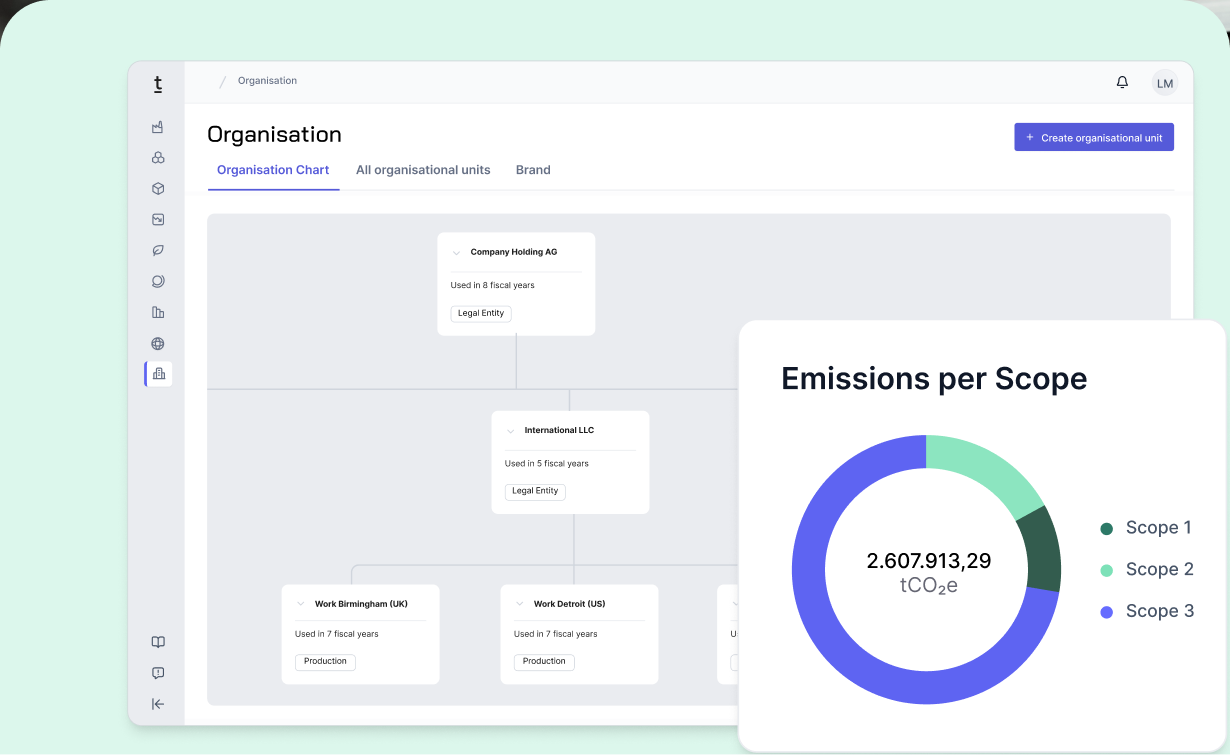
One key outcome was the increased transparency regarding the distribution of emissions across the organization. The hotspot analysis clearly showed where the largest share of Scope 3 emissions originates—particularly in purchased materials, electronic components, and transportation. These insights enable BOWA to target reduction measures where the greatest impact can be achieved.

At the same time, the accounting process became significantly more efficient. Through structured workflows and automated emission factor assignment, the time required for future CO₂ accounting could be considerably reduced.
Key results at a glance:
- CCF calculation for all three locations for the first time on a centralized platform
- Clear transparency regarding the distribution of emissions along the value chain
- Identification of key emission drivers in procurement and logistics
- Significantly reduced time effort through automated emission factor assignment
- Structured, digital data base for transparent reporting to customers and as
Outlook
The results of the Corporate Carbon Footprint have already been communicated internally and now also serve as the basis for discussions with customers from the automotive and medical industries. The current focus is on efficiently preparing the CCF for 2025 and further optimizing the established processes.
At the same time, additional topics are gaining importance - particularly the development of initial Product Carbon Footprints (PCFs) and, looking ahead, requirements related to the Digital Product Passport (DPP). These developments are driven both by growing customer expectations and the increasing importance of sustainability as a competitive factor.
In addition, BOWA is evaluating the possibility of centrally managing further sustainability requirements, such as VSME reporting, through Tanso in the future.




























.avif)


.jpg)
.jpg)


-p-800.webp.avif)
-min-p-800.webp.avif)





-p-800.webp.avif)

