


ESG software vs. consultants: Who should power your ESG operations?


Many companies begin their ESG journey with a consulting project. A corporate carbon footprint is calculated, a double materiality assessment is conducted, a report is written. Project completed.
But one year later, the work starts all over again.
Because ESG is not a one-time project – it's a process that repeats every year. And this raises an important question for many sustainability leaders: Should ESG remain a recurring consulting project – or does your company need an internal ESG operating system?
In practice, the answer is rarely either-or. It’s about creating a clear division of roles between consulting expertise and software infrastructure.
ESG Is not a project. ESG Is an operational process.
Consulting projects help many companies bring structure to the topic of sustainability – for example when preparing their first carbon footprint, conducting a double materiality assessment, or getting ready for CSRD.
However, the real work begins after the first analysis. ESG data must be updated regularly. Scope 3 emissions evolve, customers ask new questions, and auditors require additional documentation.
What initially appears to be a project quickly turns into a recurring operational process. And this is where the difference between consulting and software becomes clear: Consulting provides direction. Software enables repeatability.
Consulting and software serve different roles
Sustainability consulting is particularly valuable when it comes to strategic questions.
For example:
- building a sustainability strategy
- conducting a double materiality assessment
- identifying decarbonization opportunities
- developing transition roadmaps
- navigating complex regulatory requirements
At key milestones in an ESG journey, consultants bring valuable cross-industry experience and methodological expertise. For this reason, many companies continue to work with sustainability consultants long-term – but with a different focus. While consultants support strategic transformation, software enables the operational ESG backbone.
From consulting project to ESG infrastructure
A good example of this transition can be seen at Crespel & Deiters. The European manufacturer of wheat starches and wheat proteins had already implemented an energy management system that enabled precise tracking of Scope 1 and Scope 2 emissions.
The real challenge, however, was Scope 3. Collecting and validating data across the value chain proved significantly more complex. To structure this process, the company initially worked with an external consulting firm.
This collaboration helped establish a foundation for Scope 3 data collection and prepare the company for CSRD-related reporting requirements. However, several challenges remained: manual data processing, complex data structures and the effort required to validate information across the value chain.
Over time, Crespel & Deiters pursued a clear objective: Make ESG processes scalable within the organization.
From eight months of consulting to two months of internal accounting
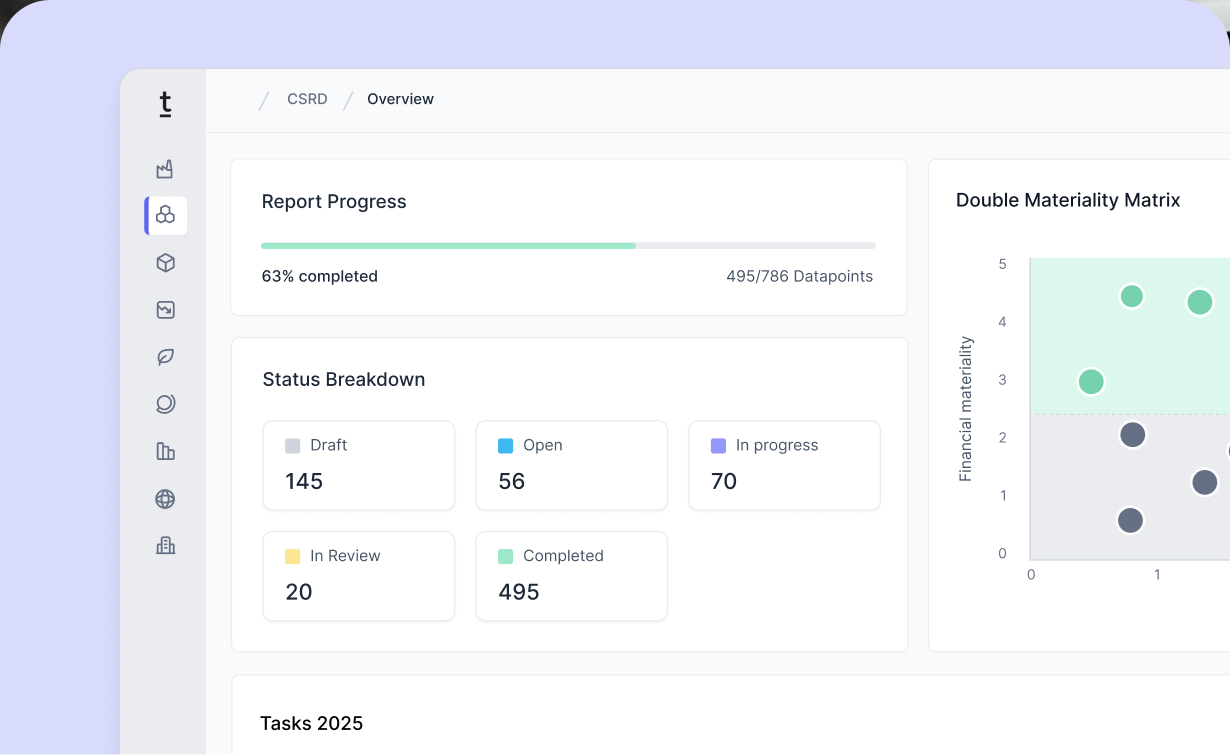
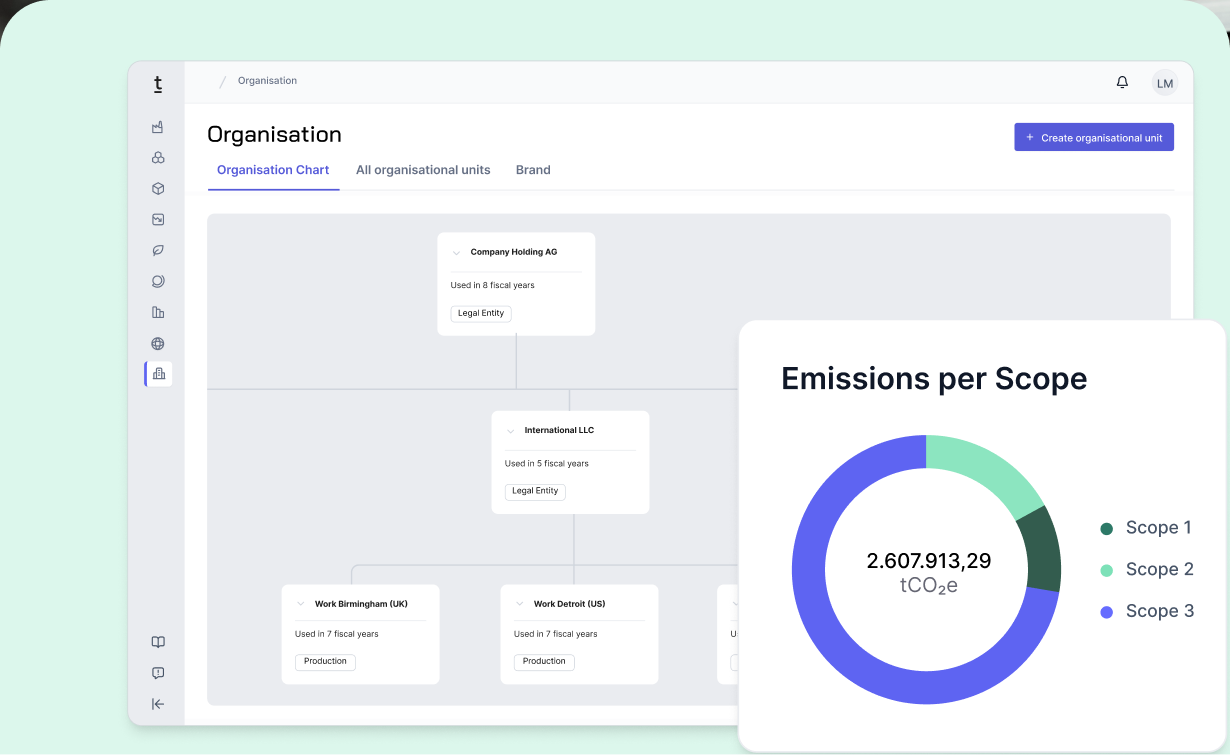
With the introduction of Tanso, the company established a centralized system for carbon accounting and sustainability reporting. The results were significant.
Jan-Oliver Hense, Head of Energy Management at Crespel & Deiters, explains:
“Thanks to the Tanso software, we were able to complete our Scope 1–3 carbon accounting internally in just two months – a 75% time saving compared to the eight months it previously took with external consulting.”
The key difference was not only speed, but control over the process. The company can now manage its carbon accounting internally while still drawing on the expertise of the Tanso expert team for methodological questions or regulatory changes.
Why ESG software becomes more efficient over time
Consulting projects deliver results at a specific point in time. Software builds a data foundation that can be reused year after year.
- A CCF becomes the basis for further analyses, regulatory reporting, and customer disclosures.
- PCFs can be derived from existing data and used for tenders or supply chain requests.
- ESG reporting can rely on a centralized dataset instead of starting new data collection cycles every year.
With each reporting cycle, the data foundation grows – and the workload decreases.
Another major advantage becomes visible during audits. Structured data collection, versioned emission factors, and full audit trails significantly reduce the workload for external auditors. Companies benefit not only from increased transparency but often also from lower audit costs and faster verification processes.
Why consultants often prefer working with software
In practice, an interesting dynamic emerges: Many sustainability consultancies actually prefer working with ESG software platforms.
Why? Because strategic analysis – such as hotspot analyses, decarbonization scenarios, or benchmarking – is only as reliable as the underlying data.
A structured and consistent data foundation allows consultants to deliver:
- deeper analyses
- more credible scenarios
- faster project timelines
Modern ESG software platforms also allow external advisors to access relevant datasets, enabling companies and consultants to work from the same data environment.
In many cases, sustainability consultancies even actively support software selection to ensure companies implement a robust and scalable ESG infrastructure.
ESG software enables better consulting
Software often makes consulting more valuable – not less. When ESG data is structured and centrally available, consulting projects can focus much more on strategic transformation instead of operational data gathering.
Instead of spending time on data collection and reporting, consultants can focus on what they do best: supporting strategic transformation.
A structured data foundation provides the basis to address topics such as:
- Developing a decarbonization strategy
- Conducting hotspot analyses
- Updating the double materiality assessment
- Refining the sustainability strategy
- Optimizing individual ESG focus areas
Companies can tackle these questions either internally – if the necessary ESG expertise is available – or bring in consultants to add additional perspectives and experience.
Conclusion: Software for day-to-day operations. Consulting for the critical moments.
Most companies begin their ESG transformation with external support – and that makes sense. But long-term success does not depend on the first sustainability report. It depends on the ability to run ESG processes continuously and efficiently.
In practice, many organizations develop a model with a clear division of roles: ESG software manages the operational backbone. Sustainability consulting supports key strategic milestones.
Or, put more simply: Software runs ESG. Consulting improves ESG.



























.avif)


.jpg)
.jpg)


-p-800.webp.avif)
-min-p-800.webp.avif)





-p-800.webp.avif)

